If you’re sourcing ice chests in bulk — for resale, for event use, for branded merchandise, or for outfitting a fleet of vehicles — the first decision that shapes everything else is what type of cooler you actually need. Rotomolded, soft-sided, and standard hard shell coolers are three meaningfully different products, and the right choice depends on how the ice chest will be used, who’s using it, and what you’re willing to pay per unit.
Here’s a practical breakdown of each type and where each one makes sense.
Rotomolded: Maximum Ice Retention, Maximum Price
Rotomolded coolers are made through a rotational molding process that creates a single-piece polyethylene shell with thick foam insulation injected into the walls. The result is an exceptionally durable product with ice retention measured in days rather than hours — typically 5 to 10 days under reasonable conditions, sometimes more.
The performance is real. Thick walls, tight lid gaskets, and heavy-duty latches add up to a genuinely capable product that outperforms standard hard shell coolers by a significant margin. That’s why rotomolded coolers dominate the premium outdoor market and why brands like Yeti built entire businesses around the category.
The tradeoffs are weight and price. A rotomolded cooler is heavy even when empty — a 45-quart model might weigh 25 to 30 pounds before you put anything in it. And the manufacturing cost is higher than both alternatives, which means higher wholesale unit costs and higher retail price points.
For wholesale purposes, rotomolded makes sense when performance is the primary selling point and the end customer is willing to pay for it. Outdoor retailers, specialty sporting goods, and premium brand merchandise are natural fits. For price-sensitive markets or applications where the cooler is moving from hand to hand rather than sitting in one place, the weight and cost may be hard to justify.
Soft-Sided: Portability First
Soft-sided coolers — insulated bags, backpack coolers, tote-style coolers — solve a different problem than rotomolded. They’re light, they compress when empty, they fit in places a hard-sided cooler won’t, and they’re considerably cheaper to manufacture.
Ice retention on soft-sided coolers varies a lot by construction quality. A well-made soft cooler with thick closed-cell foam insulation and a waterproof liner can hold ice for 24 to 48 hours. A cheap soft cooler with thin insulation and a loose zipper might manage a few hours. The range is wide, and the quality difference is hard to see on the outside.
For wholesale ice chest sourcing in the soft-sided category, the key specification is the insulation thickness and material. Ask for specifics — how thick is the foam, what’s the R-value if available, what’s the liner material and how is it sealed? Generic answers (“good insulation”) aren’t enough to know what you’re actually getting.
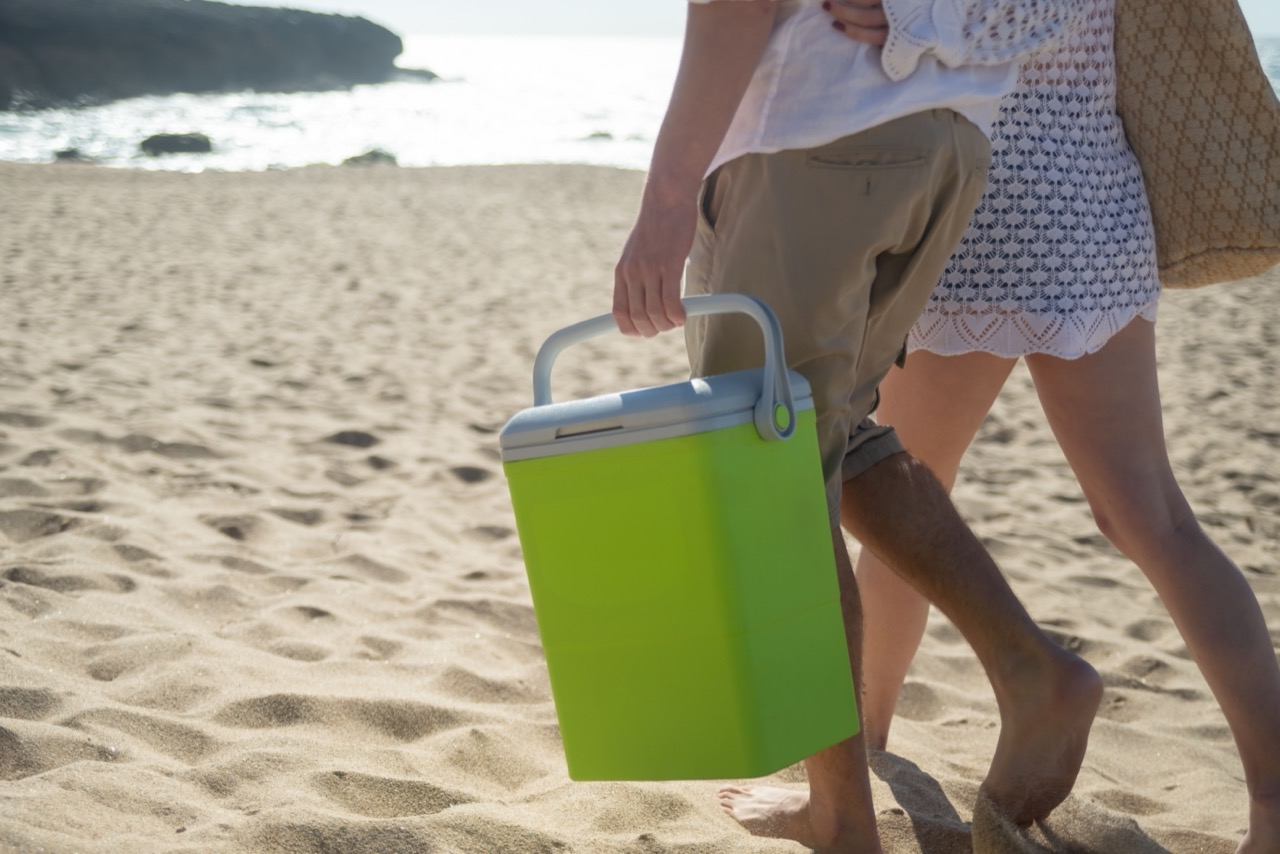
Soft-sided coolers are a natural fit for day-use applications: beach days, picnics, tailgates, lunch bags for outdoor workers. They’re also popular as branded merchandise because they’re lightweight, packable, and easier for recipients to actually use than a bulky hard-sided cooler. For outdoor brand giveaways, corporate events, and promotional merchandise, the soft-sided category often makes more practical sense than rotomolded at a fraction of the unit cost.
Standard Hard Shell: The Middle Ground
Standard injection-molded hard shell coolers — the type that’s been on the market for decades — sit between rotomolded and soft-sided on every relevant dimension. Ice retention is typically 2 to 4 days under good conditions, which is adequate for most recreational use. Weight is manageable. Price is accessible.
This is the category that makes up the bulk of volume in the cooler market, and for good reason. Most people don’t need 10-day ice retention. They need something that keeps beer cold for a weekend camping trip or food safe for a day at the beach, and standard hard shell coolers do that reliably at a price point that doesn’t require justification.
For wholesale buyers, standard hard shell coolers offer the widest selection of sizes, the most established supply chain, and the lowest minimum order quantities. Customization is generally available — molded-in colors, printed logos, custom lid graphics — without the tooling costs that come with rotomolded production.
The category’s weakness is that the market is crowded and competitive, which makes differentiation harder. If you’re building a brand around a standard hard shell cooler, the product needs to have something going for it beyond just being a cooler — whether that’s a strong brand story, a specific size that isn’t well-served by existing options, or a customization level that stands out.
How to Choose for Your Specific Use Case
The decision framework is fairly straightforward once you’re clear on the application:
Performance-critical, price-tolerant users — backcountry camping, fishing trips, extended outdoor expeditions, premium retail — rotomolded.
Casual day use, portability matters, budget-conscious — beach, tailgate, events, branded merchandise — soft-sided.
General recreational use, standard retail, wholesale volume — weekend camping, road trips, everyday outdoor use — standard hard shell.
For mixed-use wholesale assortments, many buyers source across all three categories at different price points, giving their retail customers or event attendees options rather than forcing a single choice.
What to Check Regardless of Type
Across all three categories, a few quality checks apply universally.
Drain plugs on hard-sided and rotomolded coolers should seal tightly and be easy to open one-handed. Hinges and latches should operate smoothly and feel solid. Lid gaskets on hard-sided coolers should make full contact around the perimeter without gaps.
For soft-sided coolers, the zipper or closure system is the weak point — test it under load and check that it reseals completely after repeated use. The liner should be waterproof and cleanable.
For any cooler claiming specific ice retention times, ask for test data rather than accepting marketing copy. Reputable manufacturers test under defined conditions (ambient temperature, ice type, lid-open frequency) and can share those results.
The type of cooler matters, but within each type, quality execution is what separates a product that works from one that doesn’t.